A method, taught in five stages.
Not a tip service. Not a signal. A repeatable process for deciding what to own, what it's worth, how much to hold, and what to do when the business or the market changes.
Nothing proprietary. Nothing opaque.
How the stages fit together
Each stage answers a different question. Each stage builds on the last. The method isn't about predicting the next move — it's about having a defensible answer to why I own this, at this price, in this size, in this account.
Think like a business owner, not a stock-picker.
Before any analysis, the method starts with how you think. Price is what the market demands today. Value is what the business will likely produce over its life. Confuse them, and nothing else matters. Mental models — inversion, base rates, margin of safety, probabilistic thinking, opportunity cost — shape every decision that follows.
You are buying a slice of a real business. Act like it.
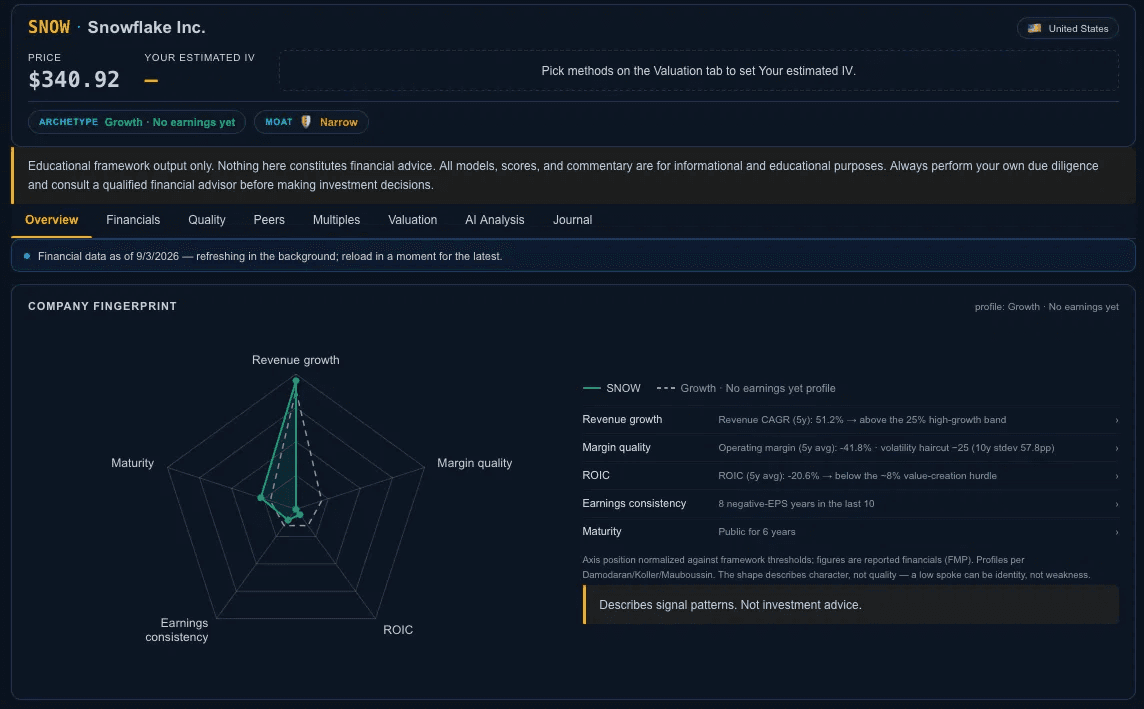
What kind of business is this?
A mature quality compounder is not valued the same way as a cyclical semiconductor or a hyper-growth software name. The archetype determines which valuation methods even apply — and which would produce confidently wrong numbers. Get the archetype wrong and everything downstream is garbage.
The archetype is the gate. Every method flows from it.
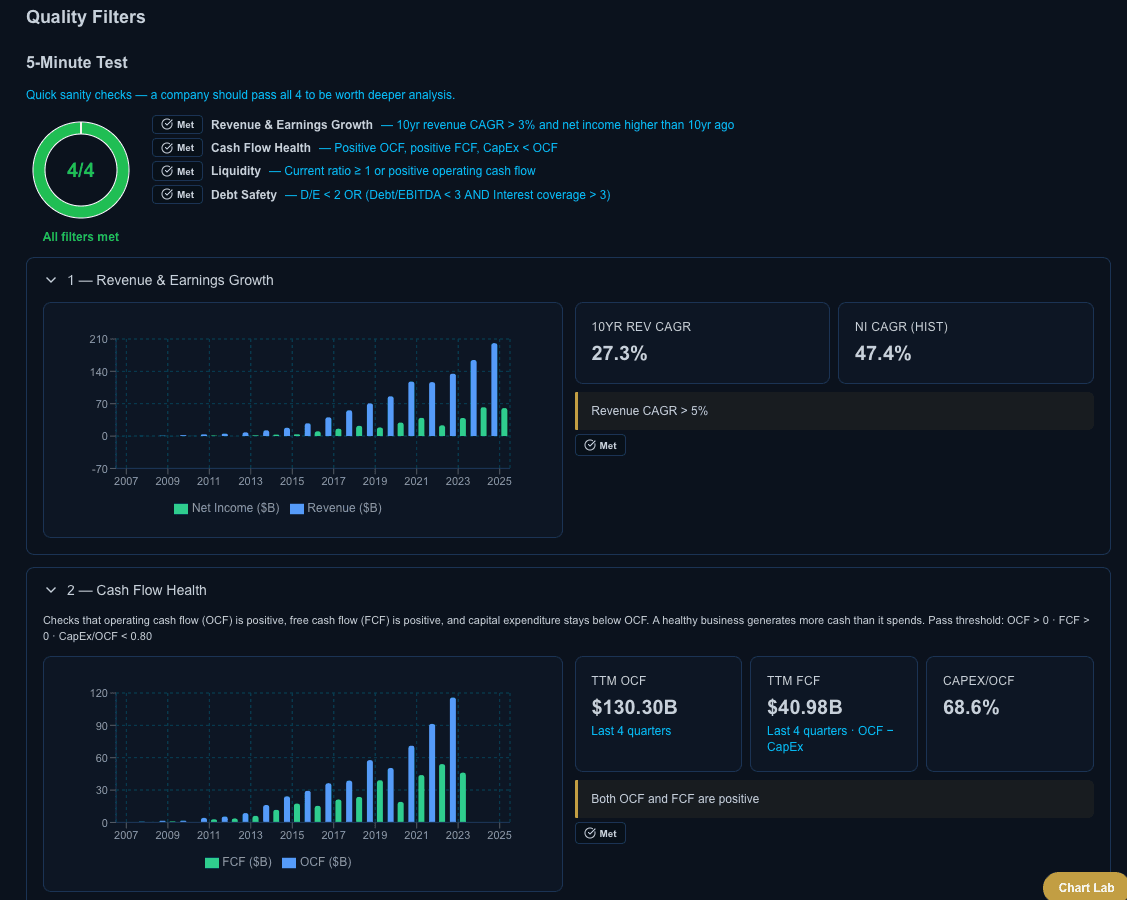
Is this business even worth your time?
Two filters before any deeper work. The five-minute test — four quick checks on revenue growth, cash flow health, liquidity, and debt safety. Then the 10-year filter — nine variables tested across twenty years of financials, deliberately spanning the 2008 and 2020 shocks because durability only shows up under stress.
Most companies fail. The ones that pass are worth the hours.
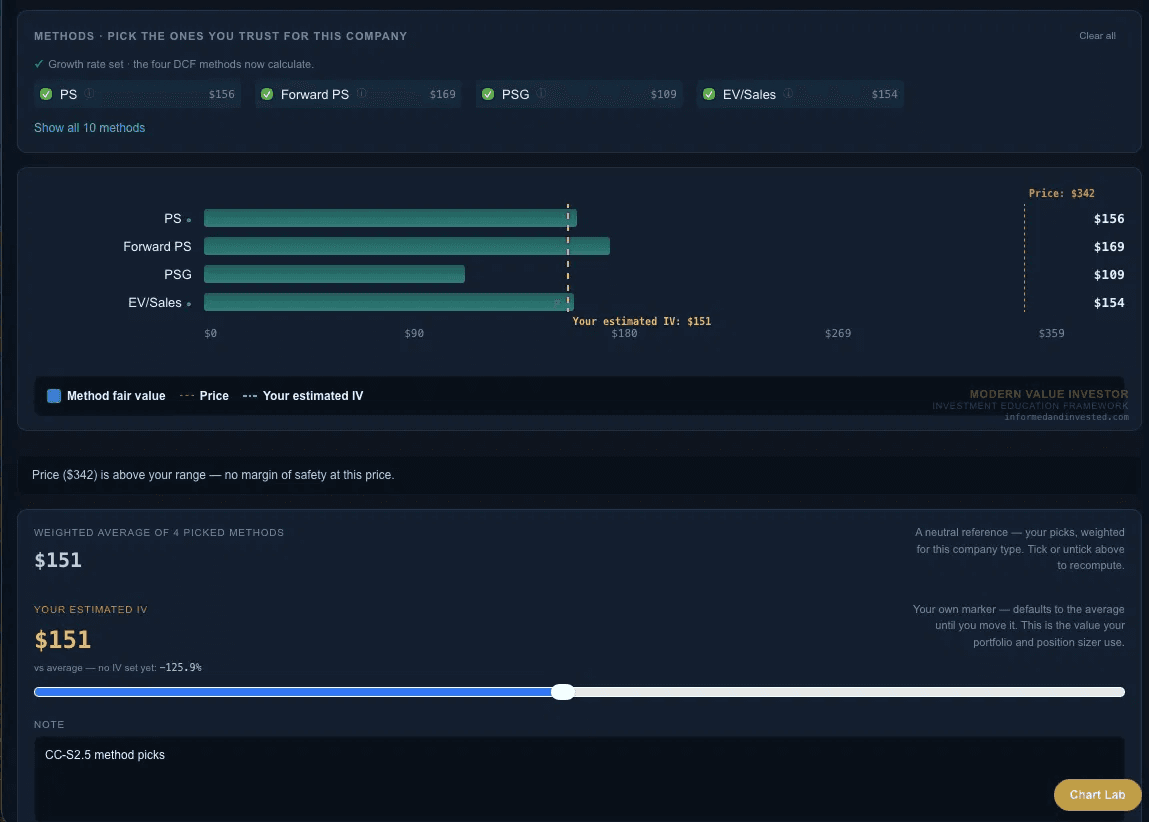
Arrive at your own number.
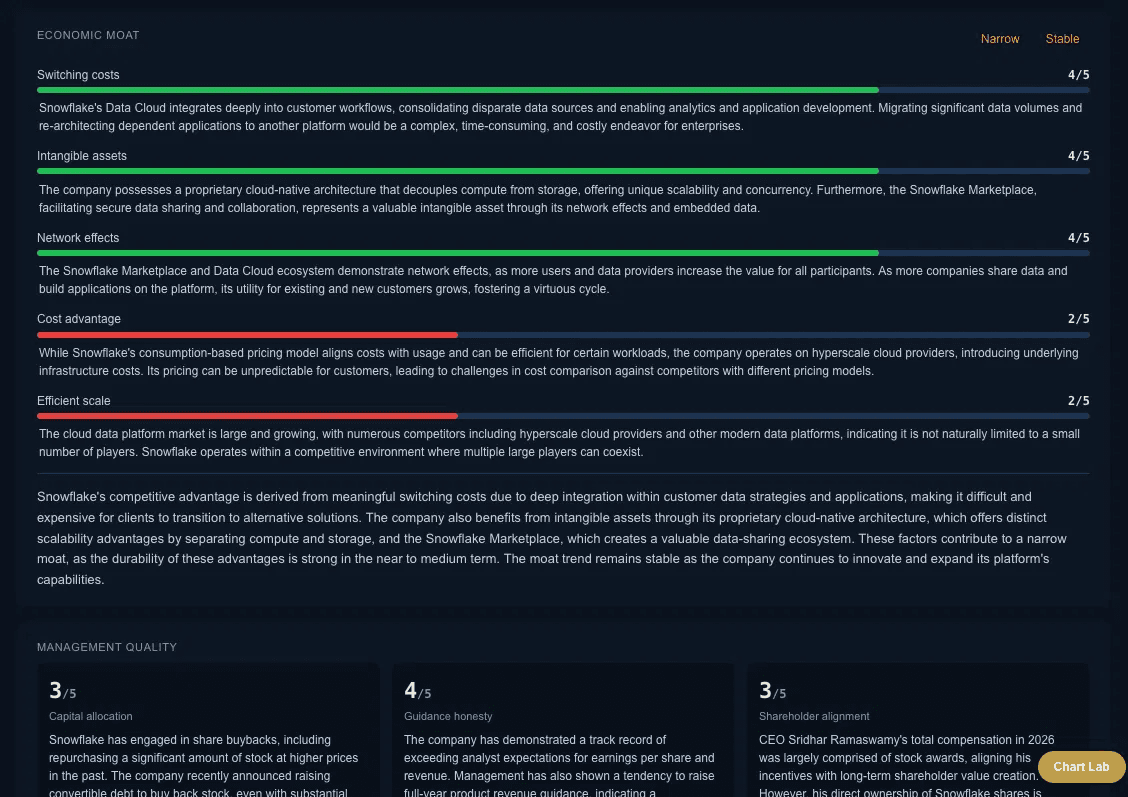
For a mature quality business: discounted cash flows, forward earnings multiples, cash-based valuations. For a cyclical: cycle-normalized multiples and averaged earnings — because projecting peak earnings forever gives you catastrophically wrong answers. For every company: an economic moat analysis that tells you whether the margins you're paying for are protected.
The math is standard. The judgment is yours. The reasoning stays visible.
Analyses become decisions.
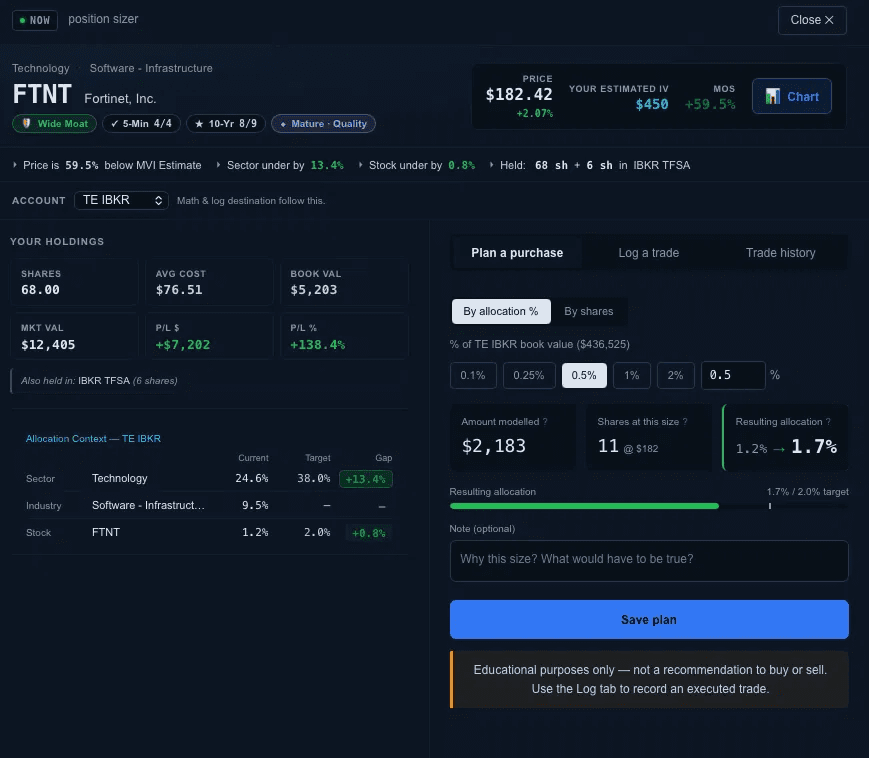
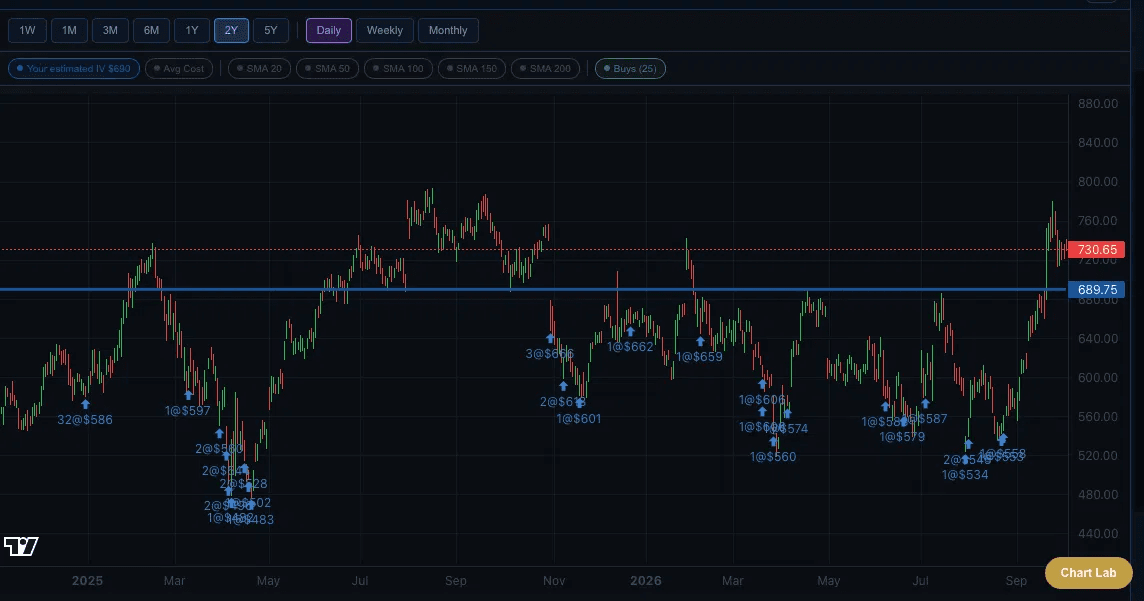
Position sizing against your existing portfolio — sector targets, position targets, drift tracking. Entry discipline using margin-of-safety math. A decision journal that plots every buy against the stock's price history so you can see, at a glance, whether you were buying on fundamentals or on hype. Monitoring and exit discipline so one bad quarter doesn't become one bad decade.
The method isn't finished at the valuation. It's finished when you've either done the right thing or chosen not to.
Where to start
Two paths through the method.
LEARN IT FROM SCRATCH
The Course
All five stages taught end to end. Mindset, mental models, archetype system, every valuation method, portfolio construction. Includes one year of Inner Circle access and the app.
See the courseAPPLY IT NOW
The App
The method made fast. If you already understand DCFs, financial statements, and portfolio construction, start applying it to companies tonight.
Try the app, freeWatch the method applied
Fifteen minutes. One company. End to end.
Watch Amit take Costco apart from archetype to valuation using the method. No tip. Just the process.
Watch the Costco walkthroughOpens on Vimeo ↗Prefer to read it? The written walkthrough →